
Subaru Forester tire size
Original tire sizes for the Subaru Forester, model years 1998 through 2024. Trim levels and wheel packages change the size within the same year, so confirm on the door-jamb sticker before ordering.
Check before you order. The surest answer is the tires on the car right now: the size is molded into the sidewall. The placard inside the driver's door tells you what the factory fitted, which can differ from what a previous owner put on. Our guide on reading a tire size shows exactly where to look.

Size by year and trim
| Model years | Trim or package | Tire size | From |
|---|---|---|---|
| 2019-2024 | Base | 225/60R17 | $75 |
| 2019-2024 | Premium/Sport/Limited | 225/55R18 | $95 |
| 2014-2018 | Base | 215/65R17 | $75 |
| 2014-2018 | Premium | 225/65R17 | $75 |
| 2009-2013 | Base | 215/65R16 | $62 |
| 1998-2002 | Standard | 205/70R15 | $50 |
Tire size by model year
| Model year | Tire size | Trim or package | From |
|---|---|---|---|
| 2024 Subaru Forester | 225/60R17, 225/55R18 | Base or Premium/Sport/Limited | $75 |
| 2023 Subaru Forester | 225/60R17, 225/55R18 | Base or Premium/Sport/Limited | $75 |
| 2022 Subaru Forester | 225/60R17, 225/55R18 | Base or Premium/Sport/Limited | $75 |
| 2021 Subaru Forester | 225/60R17, 225/55R18 | Base or Premium/Sport/Limited | $75 |
| 2020 Subaru Forester | 225/60R17, 225/55R18 | Base or Premium/Sport/Limited | $75 |
| 2019 Subaru Forester | 225/60R17, 225/55R18 | Base or Premium/Sport/Limited | $75 |
| 2018 Subaru Forester | 215/65R17, 225/65R17 | Base or Premium | $75 |
| 2017 Subaru Forester | 215/65R17, 225/65R17 | Base or Premium | $75 |
| 2016 Subaru Forester | 215/65R17, 225/65R17 | Base or Premium | $75 |
| 2015 Subaru Forester | 215/65R17, 225/65R17 | Base or Premium | $75 |
| 2014 Subaru Forester | 215/65R17, 225/65R17 | Base or Premium | $75 |
| 2013 Subaru Forester | 215/65R16 | Base | $62 |
Show the remaining 9 model years
| Model year | Tire size | Trim or package | From |
|---|---|---|---|
| 2012 Subaru Forester | 215/65R16 | Base | $62 |
| 2011 Subaru Forester | 215/65R16 | Base | $62 |
| 2010 Subaru Forester | 215/65R16 | Base | $62 |
| 2009 Subaru Forester | 215/65R16 | Base | $62 |
| 2002 Subaru Forester | 205/70R15 | Standard | $50 |
| 2001 Subaru Forester | 205/70R15 | Standard | $50 |
| 2000 Subaru Forester | 205/70R15 | Standard | $50 |
| 1999 Subaru Forester | 205/70R15 | Standard | $50 |
| 1998 Subaru Forester | 205/70R15 | Standard | $50 |
Which brand should you pick?
Subaru does not stamp its own approval code on tires the way Porsche or BMW do. Any tire in the right size that meets or exceeds the load index and speed rating on your door placard is a legitimate replacement, so pick on wet braking, tread life and price. Our picks for each size are on the size pages below.
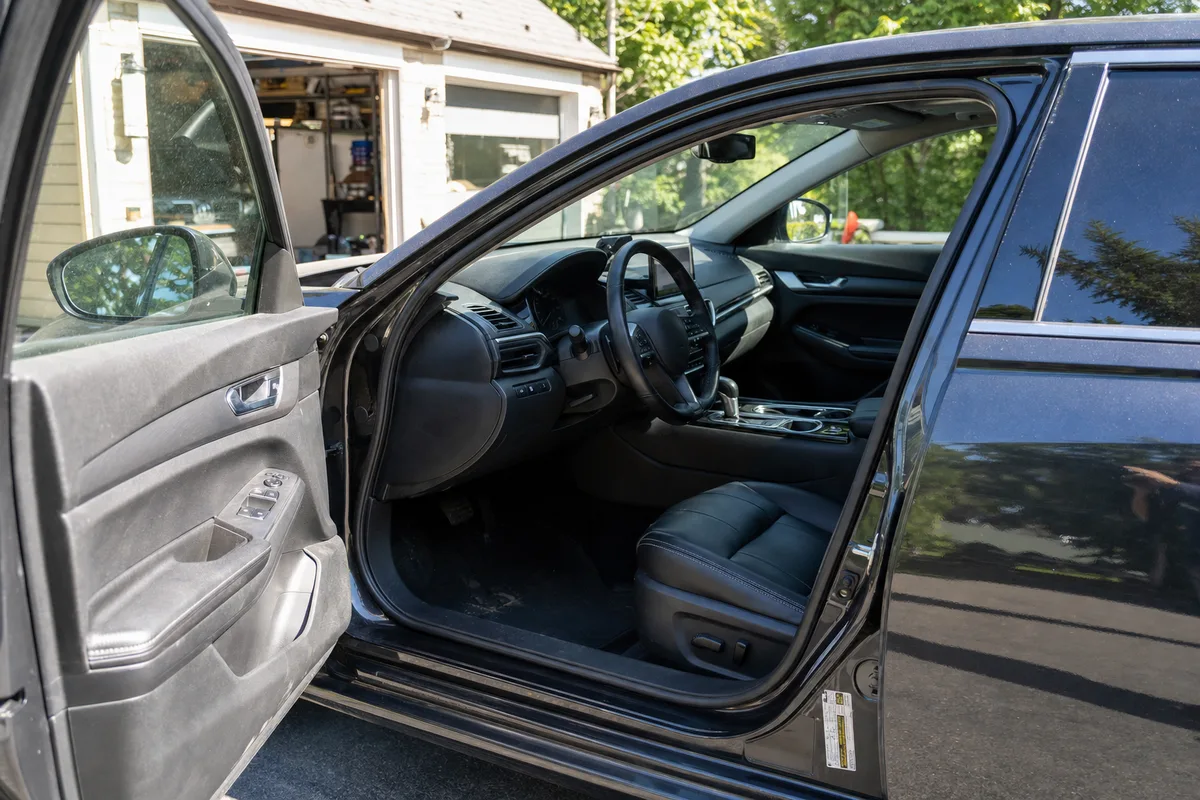
The drawing carries the sizes we list for this car, so you know what you are looking for. The placard on the car is still the final word, and it is the only place that gives the cold pressures: the number molded into the sidewall is the maximum the tire can hold, not what your car wants.
What those tires cost
About the Subaru Forester
The Forester is Subaru's compact crossover, sold with standard all-wheel drive and a flat-four engine in every year it has existed. Tire buyers usually arrive here because Subaru's all-wheel-drive system wants four tires of matching diameter, so replacing one damaged tire is rarely as simple as it sounds. Sizes have climbed steadily from 15-inch wheels in the late 1990s to 17s and 18s today.
Launched in 1997. Launched in 1997, the Forester grew out of the Streega concept shown at the 1995 Tokyo Motor Show and went on sale in Japan that February before reaching the US as a 1998 model, effectively a raised Impreza wagon aimed at buyers who wanted ground clearance without a truck.
How to tell the model years apart
Wheel and tire sizes follow the generation, not the badge, so identifying yours matters before you order.
1998-2002
First generation (SF)
Small, boxy wagon with a low roof, thin pillars and a face shared with the contemporary Impreza. It sits on 15-inch wheels and looks more like a lifted station wagon than an SUV. The 2001 facelift brought bigger headlights and a taller grille.
Tire sizes: 205/70R15
2003-2008
Second generation (SG)
Same basic proportions but with a rounded nose, a hood scoop on turbocharged 2.5XT models and 16-inch wheels. The 2006 facelift adopted the corporate winged grille. This is the last Forester that reads clearly as a wagon.
Tire sizes: 215/60R16
2009-2013
Third generation (SH)
Much taller and wider, with a conventional SUV silhouette, a longer wheelbase and rear doors that open far wider than before. Base cars run 16-inch wheels with 215/65R16 tires while upper trims move to 17s. The rear side window kicks up at the C-pillar, which the earlier cars do not do.
2014-2018
Fourth generation (SJ)
Squarer glasshouse with a large upright grille and a flatter hood; the greenhouse is noticeably deeper than the 2009-2013 car. Base trims use 17-inch wheels with 215/65R17 while Premium and Touring models move to the taller 225/65R17. The 2.0XT turbo returned with a CVT.
2019-2024
Fifth generation (SK)
Built on the Subaru Global Platform with a wider grille, hexagonal lower intake and C-shaped tail lights. Base and Premium trims wear 17-inch wheels on 225/60R17, while Sport, Limited and Touring get 18s on 225/55R18. Turbo and manual transmission options are gone; every car is a naturally aspirated 2.5 with a CVT.
What the press said
The Forester gets consistently good marks for visibility, interior space, ground clearance and genuine wet and snow capability, and it is a regular safety-award winner. The complaints are just as consistent: the naturally aspirated flat-four is slow, the CVT blunts what performance there is, and the steering and chassis offer little for a driver who wants to enjoy a road. Interior materials improved a lot with the 2019 car, and reviewers generally treat the Forester as the sensible rather than the exciting choice in the compact crossover class. Testers who want a quicker Subaru are usually pointed at the turbocharged Outback or the Ascent.
The Subaru Forester looks modern, but doesn't push its familiar all-purpose formula very far into new territory.
Car and Driver, 2026
| Model year | Units sold in the US |
|---|---|
| 2014 | 159,953 |
| 2015 | 175,192 |
| 2016 | 178,593 |
| 2017 | 177,563 |
| 2018 | 171,613 |
| 2019 | 180,179 |
| 2020 | 176,996 |
| 2021 | 154,723 |
| 2022 | 114,096 |
| 2023 | 152,566 |
| 2024 | 175,521 |
| 2025 | 175,070 |
US sales have run between roughly 114,000 and 181,000 a year over the last decade, with the 2022 dip caused by supply shortages rather than demand.
Was it a success?
A quiet commercial success and one of the two cars that carried Subaru from niche importer to mainstream brand in the US. It holds value well, especially in snow-belt states, and the reliability record is good apart from the oil consumption and head gasket issues that dogged some earlier 2.5-liter engines. Nothing about it is exciting, but a used Forester with service history is one of the easier used crossovers to recommend.
Did you know?
- The Forester was previewed as the Streega concept at the 1995 Tokyo Motor Show before going on sale in Japan in February 1997.
- General Motors India sold a rebadged version of the second-generation car as the Chevrolet Forester.
- The fifth-generation Forester launched in 2019 without a turbo engine or a manual transmission for the first time, leaving a single naturally aspirated 2.5-liter and a CVT across the entire range.
Tire options on the Subaru Forester
Because Subaru's symmetrical all-wheel drive runs a viscous or electronically controlled center coupling, the four tires need to be within about a quarter inch of each other in circumference, so replacing a single worn tire often means replacing two or shaving one to match. Sizes run 205/70R15 on the first generation through 215/65R16 and 215/65R17 in the middle years to 225/60R17 and 225/55R18 on the current car. Factory tires have typically been all-seasons from Yokohama, Falken or Bridgestone, and the Wilderness trim swaps to 17-inch all-terrains with a chunkier tread. None of the range uses run-flats and none is staggered, so a full set of four in one size is the normal purchase. Winter tire availability is excellent in all the common Forester sizes, and a dedicated winter set on a second pair of 17-inch wheels is a popular move.
Sources: en.wikipedia.org, caranddriver.com, goodcarbadcar.net.
Subaru Forester tires: common questions
What size tires does a Subaru Forester take?
The most common original size is 225/60R17. Other model years and trims use different sizes, so check the list on this page and confirm against the sticker inside your driver's door.
Can I fit a different size on my Subaru Forester?
You can, within limits: the overall diameter should stay within about 3 percent of the original, and the load index and speed rating must meet or exceed the door placard. Anything further changes your speedometer reading and can rub at full lock.
Where is the tire size on a Subaru Forester?
Open the driver's door and look at the white and yellow placard on the door jamb or the B-pillar. The same size is also molded into the sidewall of the tires currently on the car, unless someone changed them.
What size tires does a 2024 Subaru Forester take?
The 2024 Subaru Forester came from the factory on 225/60R17 and 225/55R18. Wheel packages can change that within the same model year, so check the placard inside the door jamb before you order.
What size tires does a 2023 Subaru Forester take?
The 2023 Subaru Forester came from the factory on 225/60R17 and 225/55R18. Wheel packages can change that within the same model year, so check the placard inside the door jamb before you order.
What size tires does a 2022 Subaru Forester take?
The 2022 Subaru Forester came from the factory on 225/60R17 and 225/55R18. Wheel packages can change that within the same model year, so check the placard inside the door jamb before you order.