
Do EVs Need Special Tires?
No law requires an EV-specific tire, and a good conventional tire with the right load index (usually XL) is safe on any electric car. What an EV-labeled tire adds is a package tuned for the three things EVs do to tires: they weigh 20 to 30 percent more than an equivalent gas car, they deliver full torque instantly, and they are so quiet that road noise becomes the loudest thing in the cabin. The result is 20 to 30 percent faster wear.
Whether the premium, often $20 to $50 per tire, is worth it depends on the car, your mileage and how much you value range and quiet. Below: what changes, what foam liners do, common Tesla and other OE sizes, and when a regular tire is the smarter buy.

Three things an EV does to a tire
- Weight. A Tesla Model 3 weighs about 3,900 lbs, a Model Y about 4,400, a Ford F-150 Lightning about 6,500 and a Rivian R1S about 7,000. That is 500 to 1,500 lbs more than the gas equivalent, most of it in the battery floor. More weight means more load on each tire, more heat and more wear. Most EVs specify XL (extra load) tires and higher pressures, often 40 to 45 psi.
- Torque. An electric motor delivers peak torque from zero rpm, and drivers use it. Regenerative braking loads the tires on deceleration too, so the rear tires on a rear-drive EV wear faster than owners expect.
- Silence. With no engine, tire roar at 65 mph is the dominant noise. Tire makers respond with foam liners glued inside the tire that absorb cavity resonance (Continental ContiSilent, Pirelli PNCS, Michelin Acoustic, Hankook Sound Absorber) and with tread patterns tuned for lower pitch.
Add the range incentive: rolling resistance accounts for roughly 15 to 25 percent of an EV's energy use at highway speed, so a 10 percent reduction in rolling resistance is worth 2 to 4 percent of range, or 8 to 12 miles on a 300 mile car.
| Vehicle | Curb weight |
|---|---|
| Honda Civic | 2,900 lb |
| Toyota RAV4 | 3,600 lb |
| Tesla Model 3 | 3,900 lb |
| Ford F-150 Lightning | 6,500 lb |
Battery packs add hundreds of pounds over a comparable gas car, and instant torque puts that weight to work from a standstill. Same tread compound, more load, shorter life.
What an EV-specific tire actually is
The EV label (Michelin Pilot Sport EV and Primacy All Season EV, Pirelli P Zero Elect, Continental ProContact and CrossContact EV lines, Goodyear ElectricDrive, Hankook iON, Bridgestone Turanza EV, Kumho Majesty 9 EV) usually combines:
| Feature | Purpose | Trade-off |
|---|---|---|
| XL or HL (high load) construction | Carry the extra weight; HL tires carry about 10 percent more than XL at the same pressure | Firmer ride |
| Low rolling resistance compound | More range | Historically less wet grip; modern silica compounds have narrowed this |
| Stiffer tread blocks, more wear-resistant compound | Resist torque wear | Some loss of ultimate grip |
| Foam liner | 2 to 4 dB less cabin noise | Slightly heavier; repair shops must cut the foam to patch a puncture, which not all will do |
| Optimized tread pattern and pitch sequencing | Quieter | None significant |
None of these is exclusive to EVs. A Michelin Defender2 is low rolling resistance and long-wearing; a Pirelli PNCS tire on a Mercedes has foam. The EV label mainly tells you the whole package is tuned in one direction. Browse the EV tire category to see what carries the label.
Common EV sizes and what the factory fits
| Vehicle | Common OE size | Typical OE tire |
|---|---|---|
| Tesla Model 3 (18 in) | 235/45R18 XL | Michelin Primacy MXM4 T0, Hankook Kinergy GT |
| Tesla Model 3 (19 in) | 235/40R19 XL | Continental ProContact RX T1 |
| Tesla Model Y (19 in) | 255/45R19 XL | Continental ProContact RX, Goodyear Eagle Touring |
| Tesla Model Y (20 in) | 255/40R20 XL | Goodyear Eagle F1 AS, Pirelli Scorpion |
| Tesla Model S / X (21 in) | 255/35R21 front, 285/35R21 rear | Michelin Pilot Sport 4S T0 |
| Hyundai Ioniq 5 / Kia EV6 (20 in) | 255/45R20 XL | Michelin Primacy Tour A/S |
| Ford Mustang Mach-E (19 in) | 225/55R19 | Michelin Primacy A/S, Continental ProContact |
| Ford F-150 Lightning | 275/60R20 or 275/65R18 | Hankook Dynapro AT2, Michelin Primacy XC |
| Rivian R1T / R1S (20 in AT) | 275/65R20 | Pirelli Scorpion All Terrain Plus |
| Chevrolet Equinox EV / Blazer EV | 235/55R19, 275/45R21 | Michelin, Continental OE lines |
Tesla-specific OE tires carry a T0 or T1 marking, indicating a construction and foam spec tuned for the car. Replacements do not have to carry it, but if you liked the original quiet, the equivalent T0 tire or an EV-labeled retail tire keeps that. The 255/45R19 page lists both.
When a regular tire is the right answer
EV tires typically cost $20 to $50 more per tire than an equivalent non-EV model. That is worth paying when you drive a lot of highway miles, when the car is a quiet-oriented model like a Model S, Lucid or EV6, or when you are already at the edge of your range needs. Skip the label and buy a good conventional tire when:
- The car is a light or short-range EV (Chevrolet Bolt at 3,600 lbs, Nissan Leaf, Mini Cooper SE). These are no heavier than a loaded gas hatchback and the placard often specifies a standard-load tire.
- You mostly drive in town, where rolling resistance matters less and regen does most of the braking.
- Grip matters more than range. A Model 3 Performance owner who wants the shortest wet stops may prefer a top conventional performance tire over a low-rolling-resistance EV tire.
- Winter. Few winter tires carry an EV label. A 3PMSF winter tire in an XL load rating is the correct choice, and the small range loss from the softer compound is the price of stopping on ice. See the winter tire guide.
- The conventional tire is on rebate. The price gap disappears in April and October.
Whatever you choose, match the placard: XL if it says XL, and the same or a higher load index. That is non-negotiable on a 4,500 lb car.
Swipe to compare tread types
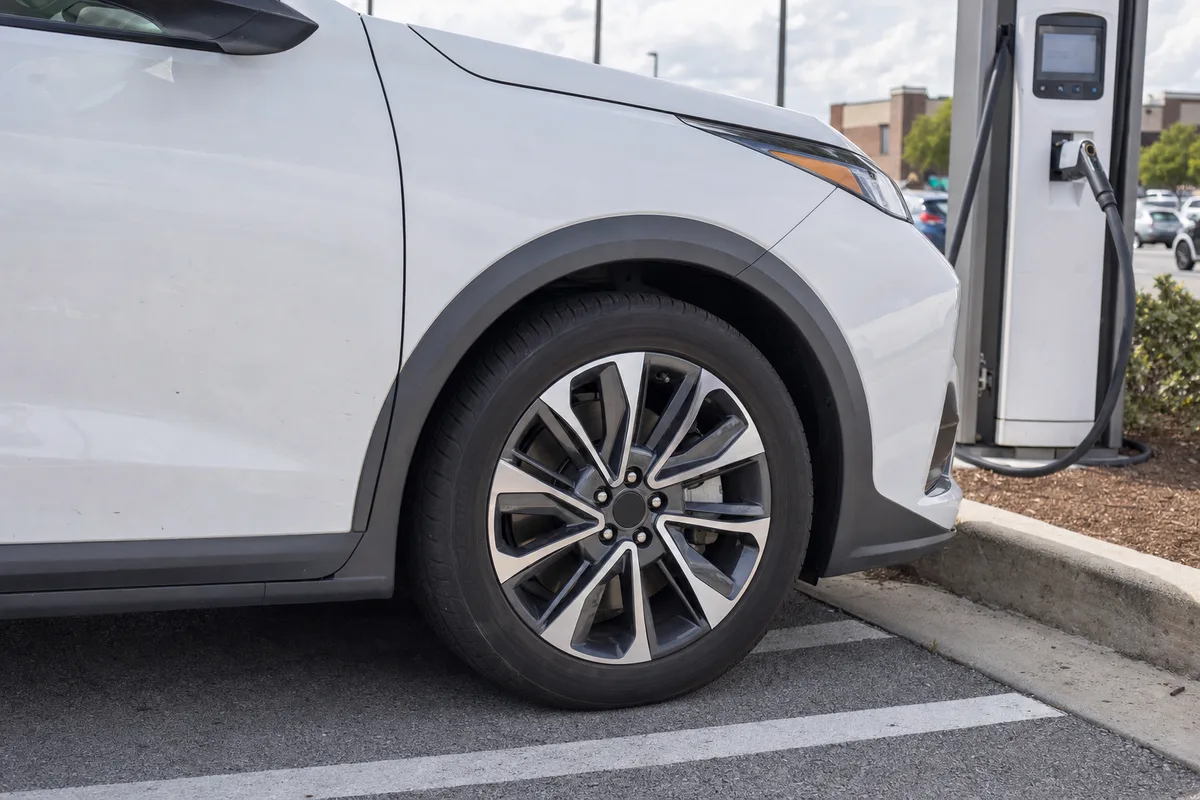
EV Tires
Tires built for electric cars: high load capacity, low rolling resistance, low noise.
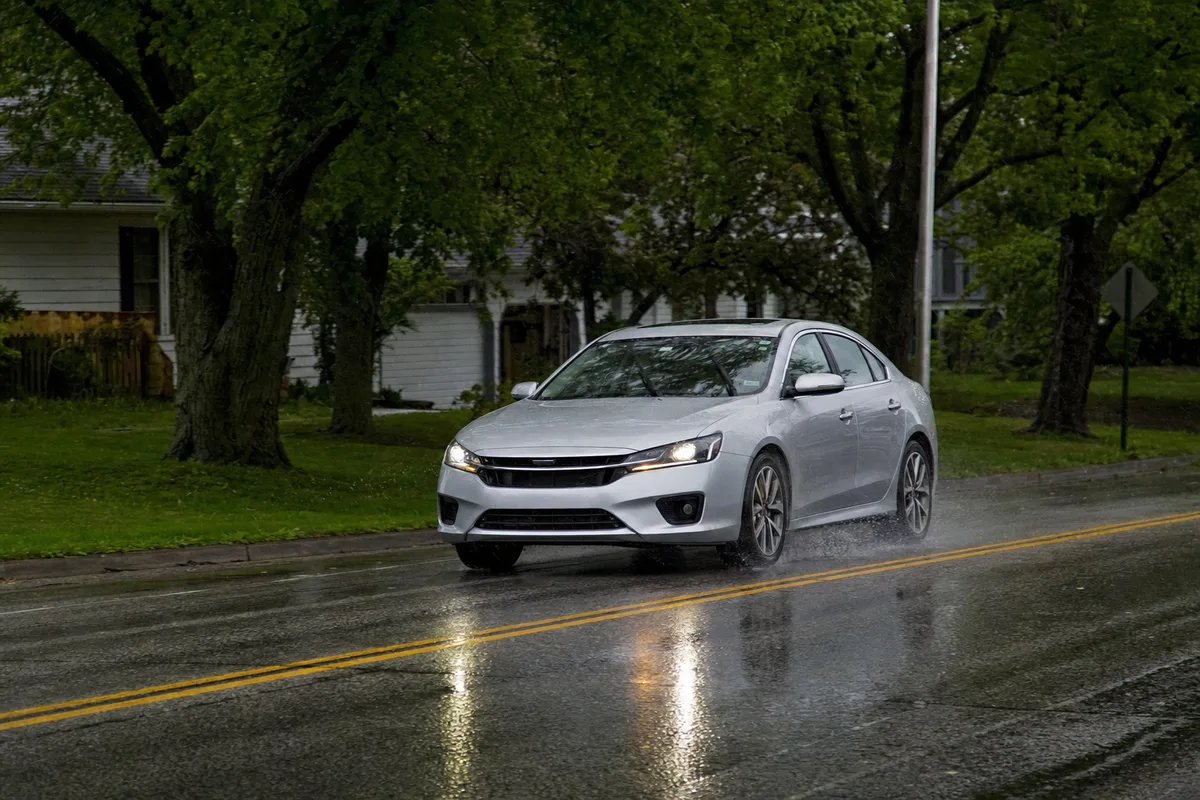
All-Season Tires
The default tire for most US cars: usable year-round in mild climates.
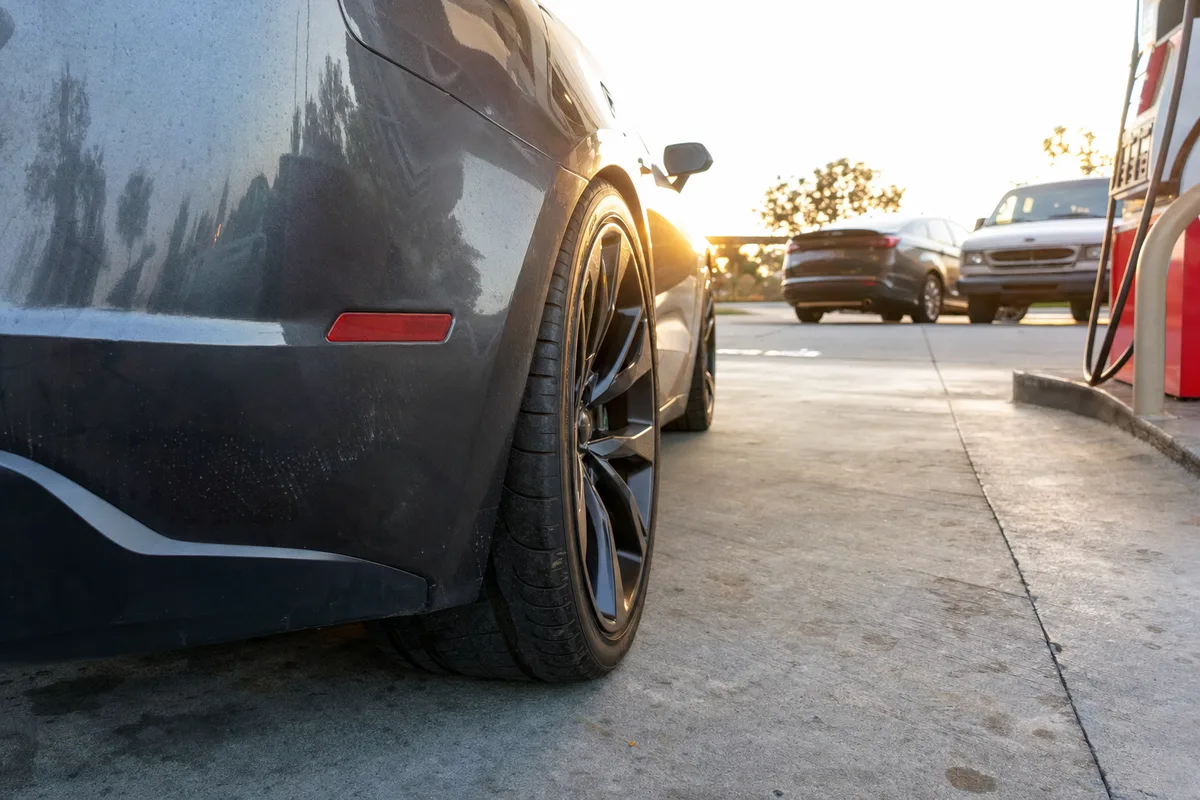
Performance Tires
Ultra-high-performance all-seasons: sporty grip in wet and dry with light-snow ability.
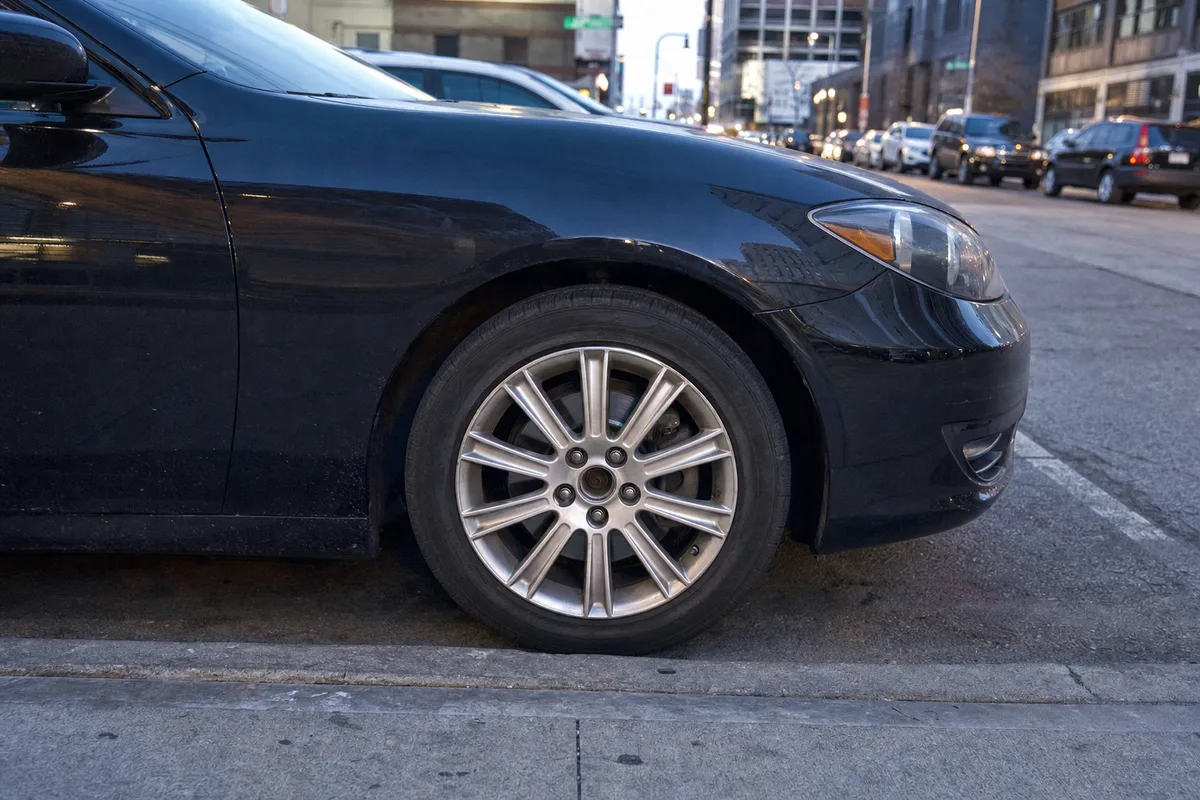
Run-Flat Tires
Reinforced tires that carry the car about 50 miles at 50 mph after losing all air.
Living with EV tire wear
Owner data and fleet studies put EV tire life at roughly 70 to 80 percent of a similar gas car's: a set that would last 50,000 miles on a Camry lasts 35,000 to 40,000 on a Model 3 driven the same way. Cheap ways to fight that:
- Pressure. Keep it at the placard figure, which is often 42 psi and easy to let drift to 36. Low pressure costs range and wears the shoulders. See the tire pressure guide.
- Rotate every 6,000 miles, and on dual-motor cars do not assume even wear; the rear often goes first because of regen and rear torque bias.
- Alignment. Heavy EVs are hard on rear camber and toe. Check yearly.
- Chill mode or a gentler accelerator setting for the daily commute removes the tire-scrubbing launches without changing anything else.
- Foam-lined tires and punctures. Many shops will repair them by peeling back the foam; some will not. Ask before you need it.
Cost and warranty notes
A set of EV-labeled tires for a Model Y in 255/45R19 typically runs in the range of $900 to $1,300 installed, against roughly $700 to $1,100 for good conventional XL tires in the same size. Mileage warranties on EV tires are usually shorter, 40,000 to 60,000 miles, and a few makers offer none, reflecting the wear reality. Some warranties exclude vehicles above a certain weight, which catches Lightning and Rivian owners who fit a passenger-rated tire.
Range claims from tire makers are real but modest, usually 2 to 5 percent versus a standard tire, and they depend on pressure and driving far more than on the label. The quieter cabin, on the other hand, is immediately noticeable and is what most owners say they would pay for again. The deals page tracks EV tire rebates, which Michelin, Continental and Hankook now run alongside their spring and fall offers.
Frequently asked questions
Can I put regular tires on a Tesla?
Yes, as long as they meet the size, XL load rating and speed rating on the door placard. You will lose the foam-liner quiet of the factory T0 tires and possibly a few percent of range, but safety is not affected. Many owners choose a conventional performance or all-weather tire for better grip.
Why do EV tires wear out so fast?
Extra battery weight, instant torque from the motor and regenerative braking all scrub tread harder than a gas car does. Typical EV tire life is 70 to 80 percent of the gas equivalent. Correct pressure, rotation every 6,000 miles, annual alignment and a gentler drive mode recover most of the difference.
Are EV tires worth the extra cost?
For highway commuters, quiet-focused cars and drivers who need every mile of range, the $20 to $50 per tire premium buys 2 to 5 percent more range and a noticeably quieter cabin. For light EVs, city driving and winter tires, a good conventional tire with the correct XL load rating is the better value.
What tire pressure should an EV run?
The figure on the door placard, which for most EVs is 40 to 45 psi cold, higher than a gas car because of the weight. Underinflation costs range and wears the shoulders. Check monthly and after big temperature changes, since pressure drops about 1 psi per 10 F.
Updated September 2026.