
All-Terrain Tires
Truck and SUV tires for dirt, gravel and snow that still drive fine on the highway.

Shopping for your Jeep Wrangler TJ Rubicon. Original size 31x10.50R15. See every year and trim.
Find all-terrain tires for your car
We list the sizes your vehicle takes and send you straight to all-terrain tires in those sizes. Cars with different front and rear sizes are shown as two separate buys.
All-Terrain Tires for a Jeep Wrangler TJ Rubicon
31x10.50R15
All-Terrain Tires in this size typically runs $149–$177 per tire.
Shop all-terrain tires All brands
Also at Walmart, Costco and SimpleTire.
Everything about Jeep Wrangler TJ Rubicon tires
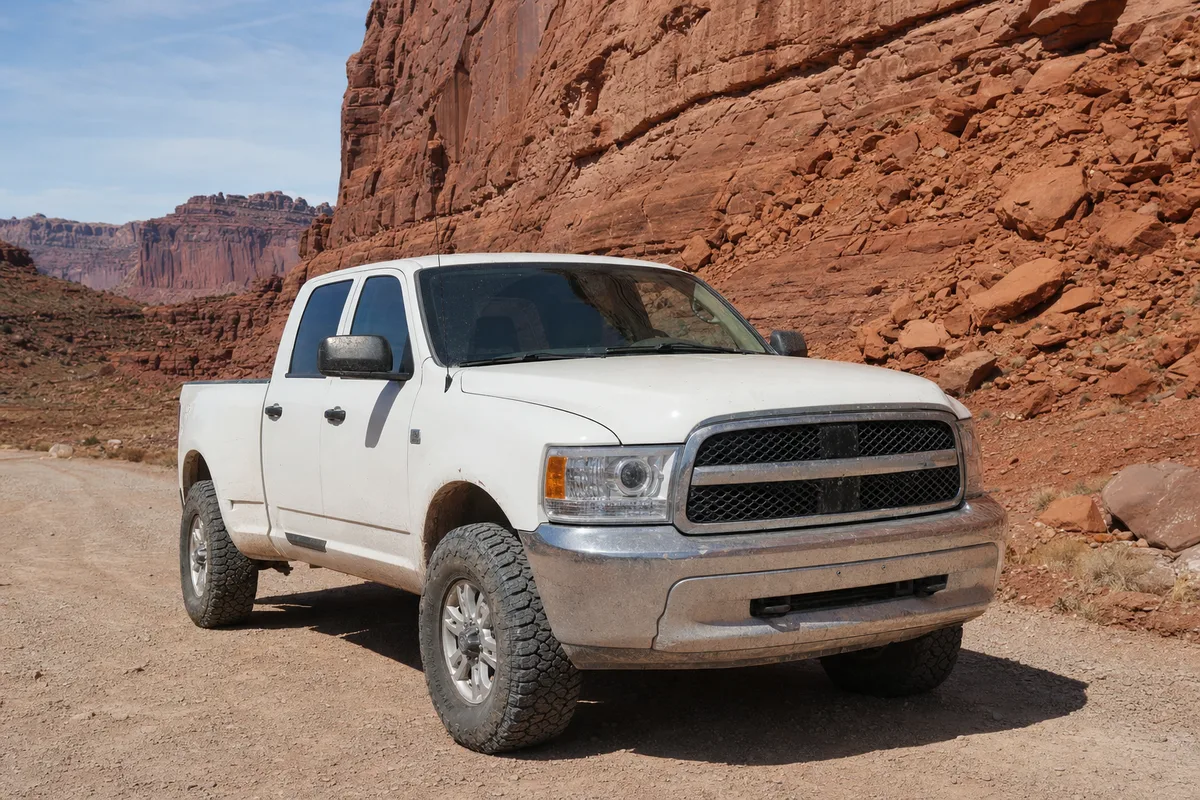
All-terrain tires are the most popular upgrade for American pickups and SUVs. The tread uses larger, more open blocks than a highway tire so it can dig into dirt, gravel and snow, and the sidewalls are usually reinforced against cuts. A modern all-terrain like the BFGoodrich KO3, Falken Wildpeak A/T4W or Toyo Open Country A/T III is quiet enough for a daily commute and capable enough for a hunting trip, a boat ramp or a snowed-in driveway.
Who they are for
They are for truck and SUV owners who actually use the vehicle: towing, gravel roads, job sites, camping, ski trips. They are also bought for looks, which is fine as long as you understand the cost. Compared with a highway tire, an all-terrain is heavier, louder, wears a little faster and typically knocks one to two miles per gallon off fuel economy.
What to know before you buy
The category has quietly split. Traditional all-terrains carry 50,000 to 65,000-mile warranties and the 3PMSF winter symbol on most sizes. Hybrid or rugged-terrain tires like the Nitto Ridge Grappler and Atturo Trail Blade X/T sit between all-terrain and mud-terrain, with more aggressive tread, more noise and often no mileage warranty.
When shopping, check whether you need an LT (light truck) size with load range C, D or E for towing or a heavy truck, or whether a P-metric or Euro-metric size is fine for a crossover; check the 3PMSF symbol if you see snow; and compare weight, since a heavy tire hurts ride and economy. Prices run from about 110 dollars for a budget 16-inch tire to 350 dollars or more for 35-inch LT sizes.
Buy this if
Pickup, Jeep and SUV owners who tow, drive gravel or dirt roads, or need real traction in snow and mud.
- Genuine traction on dirt, gravel, mud and snow
- Reinforced sidewalls resist punctures and cuts
- Most carry the 3PMSF symbol and real mileage warranties
- Wide choice in LT sizes and load ranges for towing
Skip it if
Your truck or crossover never leaves pavement and you care about fuel economy, quiet and tread life.
- Louder and heavier than highway tires; costs 1 to 2 mpg
- Shorter tread life than a highway tire on the same truck
- Hybrid designs often have no mileage warranty
Best all-terrain tires right now






BFGoodrich All-Terrain T/A KO3
The toughest sidewall and the most proven off-road record in the class.
Common sizes for all-terrain tires
All-Terrain Tires: common questions
Are all-terrain tires good in snow?
Most modern all-terrains carry the 3PMSF symbol and do well in snow, better than a highway tire and far better than a summer tire. They are still not a winter tire on ice. Tires like the Cooper Discoverer AT3 4S, Falken Wildpeak A/T4W and Toyo Open Country A/T III are known for good winter manners.
Do all-terrain tires hurt gas mileage?
Yes, typically by one to two miles per gallon compared with a highway tire, because they are heavier and have more rolling resistance. Hybrid and LT-rated tires cost more than lighter P-metric all-terrains. On a truck getting 20 mpg, that is a real but modest cost.
Do I need LT tires or P-metric tires?
If you tow heavily, carry loads or drive a three-quarter-ton or larger truck, use the LT size and load range on your door placard, usually E on heavy-duty trucks. Half-ton pickups and SUVs usually came with P-metric or Euro-metric tires and can stay with those. LT tires ride harder and weigh more, so do not upsize without a reason.
How long do all-terrain tires last?
Traditional all-terrains carry 50,000 to 65,000-mile warranties and usually deliver 45,000 to 60,000 miles on a daily-driven truck. Hybrid tires with no warranty typically last 40,000 to 50,000. Rotation every 5,000 miles is essential on trucks, especially four-wheel-drive models.